The International Relations Study Program (HI) of Parahyangan Catholic University (Unpar) along with the International Relations Study Program Student association (HMPSIHI) of Unpar had once again conducted their annual program “International Relations Study Visit 2016” through their external division. This year’s study visit adopts the main theme of “The Agenda for Sustainable Development: Transforming our World” with three sub-themes, namely: gender, smart-city, and climate change, which also covers education.
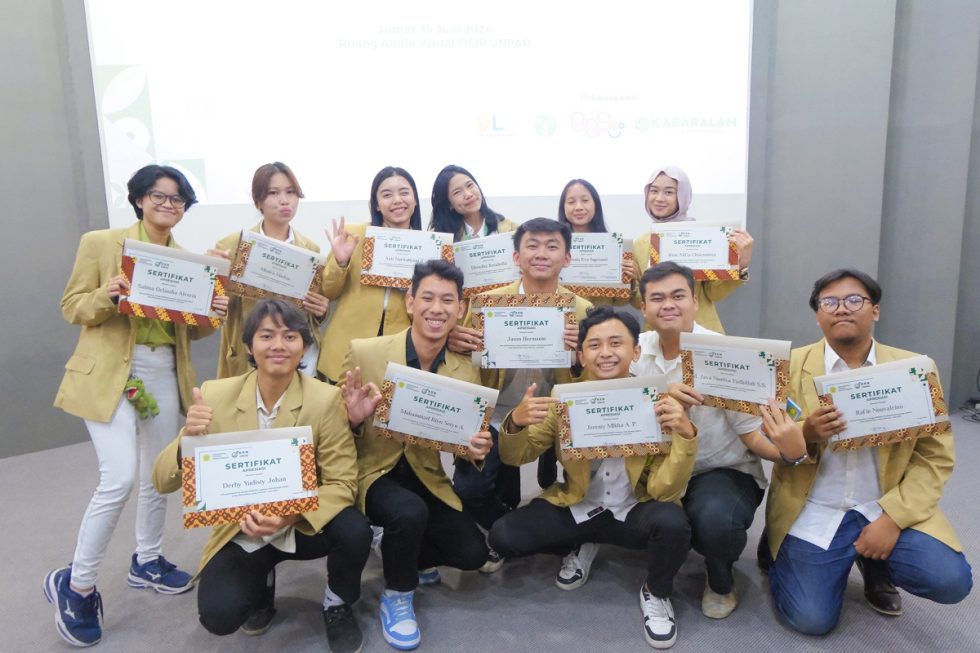
Held for two days from October 19 to 20, 2016, the study visit that was joined by 119 International Relations students from the class of 2014 and 2015 along with 3 Mentor lecturers took the participants to visit various embassies as well as government institutions. The participants were divided into 3 buses in accordance with their choice of sub-theme. It was in fact different from the previous undertaking that had only focused on a single theme.
Bus A with a gender equality sub-theme went to visit the Republic of France’s embassy and the UN Women of Indonesia’s office on the first day. At the Republic of France’s embassy, participants were given a description of the gender equality situation in France as well as the issue of climate change and its relation to the Paris Agreement, an international agreement related to climate change that was delivered by Lucille Sancho, university cooperation coordinator of the Republic of France’s Embassy. Meanwhile, during the visit to the UN Women of Indonesia’s office, the participants were received directly by Lily Puspasari as the Project Officer of UN Women of Indonesia, who explained the functions of UN Women as an extension of the United Nations(UN) in promoting gender equality by revealing many perspectives as well as the ratifications of Human Rights in Indonesia.
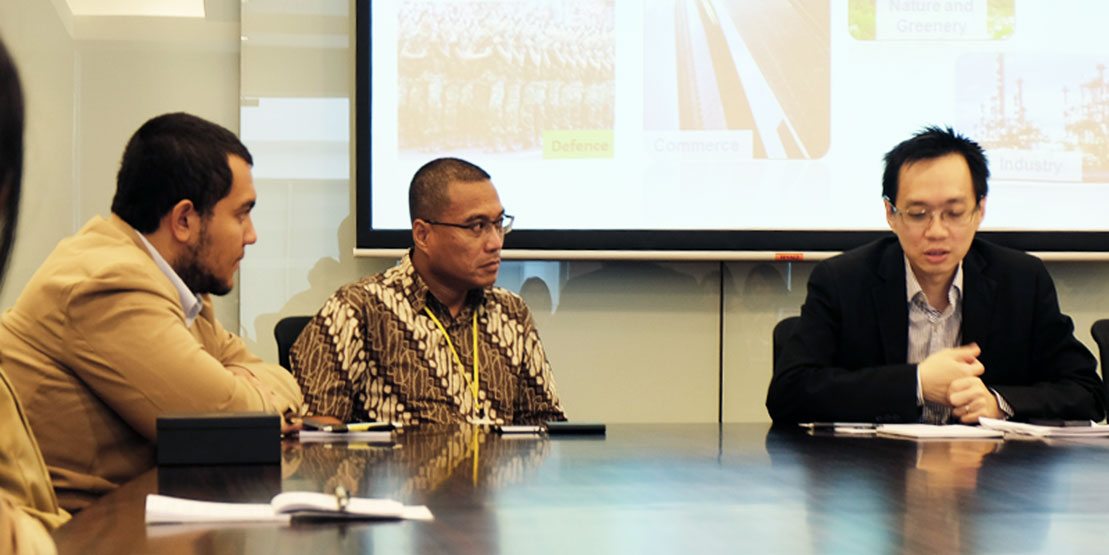
Other Participants in Bus B visited different destinations, namely the Republic of Singapore’s embassy as well as World Bank Indonesia by bringing the theme of Smart City. Nicholas Lee as a counselor at the Republic of Singapore’s embassy explained the implementation of the Smart City concept in the country with a total population of 5.61 million people per June 2016 (according to the National Population Talent Division Singapore) and a land width of 179.2 sq km, as well as the strategies used for its development. Later at the World Bank Indonesia’s representative office, the participants received an explanation from Marcus Lee as Senior World Bank Urban Economist concerning the institutional functions of the World Bank as well as the realization of Sustainable Cities and Communities which is the 11th point of the Sustainable Development Goals (SDGs).
At the same time, participants on Bus C were taken to the Embassy of Japan and the World Research Institute (WRI) to discuss education in Japan. Hirokazu Kubo, the Special Assistant Staffer Cultural Exchange of Japan Embassy explained the educational system adapted by Japan as well as existing scholarship opportunities, as well as cooperation established by Japan-Indonesia in this field. Participants were then diverted to the issue of the environment by Hanny Chrisolite whom as Forests and Climate Program Officer of WRI, was the one who elaborated on the issues that we are currently facing, namely climate change, energy efficiency efforts, and the solution to them.
On the second day all participants were invited to visit Jakarta’s smart city located within the area of DKI Jakarta city hall to explore as well as to see how the system of the smart city central control works. Later they gathered at the auditorium of DKI Jakarta City Hall to receive a briefing on SDG’s development in Jakarta. In addition, representatives from the Ministry of Foreign Affairs were also present to deliver a brief concerning SDGs development in Indonesia. the role of crude palm oil in lessening economic disparity was among the themes discussed.
Rio, one of the participants revealed his pleasure in participating in this activity because he was able to gain new perspectives that the International Relations science does not only deal with governance and hard politics issues but low politics issues are also required. To him low politics issues such as smart city have a more direct impact on people’s welfare because it is directly related to our lives and involves all elements of the society instead of only those who are the main actors of international relations.